Hebrew Poetry in the Sealed Book — Part 2 — by Renee Sheryl Crowell
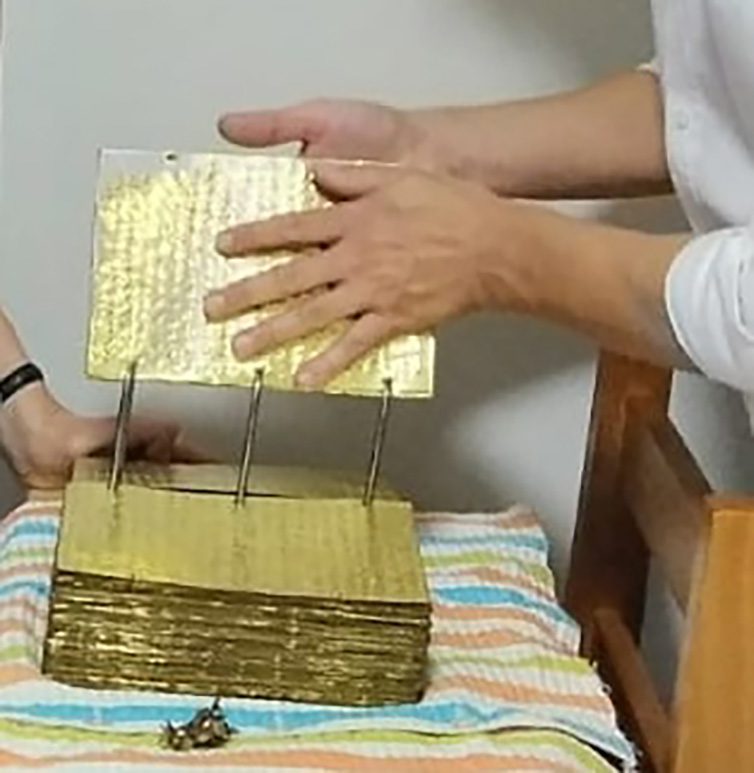
1. In the article, Hebrew Poetry in the Sealed Book Part 1, published in the Herald of the Second Invitation on October 1, 2025, we learned how to discover synonymous and antithetical parallelisms, which are Hebraisms. Parallelism is a basic element of Hebrew Poetry used by the prophets of Jehovah in ancient scriptures. In Part 2, we will learn about a more intricate type of parallelism in sacred Hebrew Poetry, called “chiasm”. A “chiasm” is an inverted parallelism, a poem which uses a presentation of words or thoughts followed by a second presentation of words or thoughts, but in reverse order. This type of parallelism can be very simple or very complex, but either way, it is a device used to focus our attention on a central idea of the prophet’s message. “…chiasmus was the most stately and dignified presentation of a subject; and is always used in the most solemn and important portions of the Scripture” (Angela Crowell, Hebrew Poetry in the Book of Mormon: Part 1, page 15).
2. The following verse in paragraph 3 has an example of a simple chiasm in The Sealed Book of Mormon. The central location in this poetic structure, which is [C] [C’], places great emphasis on the law that was given to the Enochians as well as the Nephites, similar to how italics emphasize words in our documents. Indeed, this chiasm is a solemn and important thought to understand since the Nephites left us a model, utilizing this same law, to lay the foundations of Zion in our day.
3. When we climb and descend the staircase of words shown below, starting from the central lines [C] and [C’], we should notice all the parallelisms that correspond to each other by paying attention to the synonymous words in bold and in red. Once the central parallelism is identified, the procedure for discovering more parallelisms extending away from the middle, in both directions, is more recognizable. First, read only the bold words on the parallel lines together, climbing and descending the staircase simultaneously. Start at the first [C], then read the second [C’]. Proceed this way through [B] [B’] to [A] [A’]. Once you do this, you will never be able to unsee what Jonah, one of the three Nephites, emphasized in this prophetic, Hebrew poem. In the second part of this exercise, start at the first [A] reading the entire line, then read the second [A’], descending and ascending the staircase at the same time to make your way back to the center, [C] [C’]. In other words, see the corresponding A lines as a unit. Do the same with the B and C lines. When you do this, you will see the entire “thought” that rhymes in each unit of the poem. When studying the chiasmus in this way, we see that what is above is below and what is below is above. Poetic oneness appears. The voice of Jehovah flows with great power through the poetry of his holy prophets.
[A] We have always understood that the day would come
[B] when we would have to implement this greater law,
[C] which was given to Enoch,
[C’] and later revealed to our ancestors
[B’] when Moses in the desert clearly taught this same law to the covenant people,
[A’] when he said: that every man Consecrate yourself and your son and his brother, that God may bestow on him a blessing on this day.
(Chiasm discovered in The Sealed Book of Mormon, Acts of the Three Nephites 8:4)
4. Does the discovery of this chiasm enlighten our minds and fill our hearts with wonder when we recognize that during our lifetime, this same law that was given to Enoch and revealed to Moses has also been given to Sealed Book Mormons through Maurício Artur Berger, the President of the United Order, as it was revealed to the Nephite people after the resurrected Jesus visited them?
5. With the use of Hebraisms, including parallelisms and chiasmus, the need for comas or periods and exclamation points were not necessary in ancient Hebrew scriptures in order to understand where one thought ends and a new thought begins, or where one should speak with zeal or speak gently, due to the poetry of thoughts and central ideas naturally leading the reader to know where to add emphasis, where to pause, then start a newly expressed idea with appropriate zeal. Think about this: If there were no punctuation in a document which contained Hebrew poetry, such as the Torah scrolls or the Plates of Mormon, what could have helped teachers of the law know where to stop and begin a new thought? The answer is: carefully crafted rhymes of thought with parallelisms, Hebrew idioms, Hebrew lists, and other Hebraisms and Hebrew poetry recognized by rabbis and dedicated scholars of the Torah and other scriptures of Hebrew origin, such as the Book of Mormon and The Sealed Book of Mormon.
6. In The Sealed Book of Moses 16:3, we see another chiasm. When reading the poem starting from the center, one can see that each line mirrors, or parallels, each simultaneous step back to [A] [A’]. We can study every chiasm from the middle to the extremes, or from the extremes to the middle. The way the poetry is arranged in this article is not how we would normally read The Sealed Book of Mormon and other scriptures; it is an exercise for recognizing Hebrew poetry woven into our own language. Now let’s examine the following verse:
[A] This being the terms predetermined by God to organize His church properly on the face of the earth,
[B] just as it occurred on the day of the first Passover
[C] observed by the Hebrews in Egypt
[D] on the fourteenth day of the month Abib.
[E] — However, the day when God established His church in the days of Adam,
[F] He set a fixed and unchanging day for the children of men, regardless of the position of the moon in the heaven;
[E] to which He set out in all ages to properly organize and structure His church on earth,
[D] and which by chance to occur on the fourteenth day of the lunar calendar
[C’] among the people of Israel in Egypt,
[B’] making this day for to be remembered for they, of generation after generation,
[A’] but which for God, does not change the fixed day decreed by Him and His Only Begotten before the foundation of the world and for all eternity.”
(Chiasm, discovered in The Sealed Book of Moses 16:3. There is an entanglement of Hebrew poetry surrounding this verse, but there is not space in this article to cover the many Hebraisms that have been discovered in The Sealed Book).
7. Several of the very first verses inscribed on the sealed portion of the Plates of Mormon are structured with Hebrew poetry. There is more poetry to be found in these verses, including the verses referenced in Part 2 of this article below—because there is an intertwining, along with an entanglement of information—superimposed on the Hebrew poetry that was engraved on the plates of Mormon. However, even though more intricate poetry is available for those who seek to know the mysteries of God, this paragraph only focuses on two simple chiastic structures discovered in the very first paragraph of the Sealed Book of Mormon, in the first chapter, Words of Moroni, verse 1, which follows:
[A] And now behold, I desire to speak unto those who shall have the words of this book in their hands,
[B] after the Lord has stretched forth His arm upon the Gentiles in the latter days.
[B] For, behold there shall be many of the Gentiles, and also of the Jews,
[A] that shall not harden their hearts concerning the words of this book which Nephi prophesied,
(The poetry above is very simple using very plain and precious word-pairs of exact keywords in [A] [A] and [B] [B] in this first chiasm of verse 1).
8. The second chiasm of verse 1 represented below, follows with an antithetical “rhyme of thought” in [A] [A’], using the keywords “revealed” and “sealed”, and then [B] [B’] is a synonymous rhyme of thought:
[A] when this book shall be revealed
[B] unto the children of men,
[B’] and written unto the Gentiles
[A’] and sealed again to the Lord.
9. Moroni was not just giving us a brief introduction at the beginning of The Sealed Book. Moroni is telling us through Hebrew poetry that “The words of this book”—The Sealed Book of Mormon—are most solemn and important. Remember, chiasmus “is always used in the most solemn and important portions of the Scripture” (Angela Crowell). When we recognize the emphasis placed on words and phrases by the poetic arrangement of the prophets of God, our eyes open just a little wider than before. But, there is another point to this article: respected and honest teachers and scholars of Hebraisms will be able to recognize the ancient Hebrew origin and exquisite Hebrew syntax in The Sealed Book of Mormon when they commit to opening and investigating its pages.
FOOTNOTES:
The knowledge regarding Hebrew Poetry exposed in this article by Renee Crowell is quite basic compared to the source Renee learned from—the published papers, and research by her late mother-in-law, Angela Crowell, whose credibility regarding Hebraisms in scriptures was recognized by respected scholars of Hebraisms among the major factions of Mormonism. This is plain to see when searching Google with the keywords, “Angela Crowell Hebraisms”. Some of the scholars who referenced Angela Crowell in their publications were: author Wade Brown quoted in Part 1 of this article; John A. Tvedtnes; and Raymond C. Treat. Tvedtnes wrote, “Angela Crowell has presented three papers at meetings of the Central States regional meetings of SBL [Society of Biblical Literature]. In the Spring of 1988, she presented a paper entitled ‘Biblical Hebrew Poetry in the Book of Mormon.’ A year later, she read a paper based on her MA thesis topic, ‘A Comparative Study of Biblical Hebrew Sentence Structure in the Old Testament and in the Book of Mormon.’ After the session, she was approached by a professor/rabbi who told her that he had taught a class at the University of Missouri-Kansas City on the Book of Mormon. In April 1992, Crowell presented a paper entitled, ‘A Comparative Reading of Homiletic and Narrative Midrash in the Bible and in the Book of Mormon’.” John A. Tvedtnes, Scholarship in Mormonism and Mormonism in Scholarship, 2001.
RESOURCES:
The Sealed Book of Mormon: Words of Moroni, The Sealed Book of Moses, Acts of the Three Nephites
Angela Crowell, Hebrew Poetry in the Book of Mormon: Part I & II, Recent Book of Mormon Developments, Volume 2, Articles from the Zarahemla Record, pp. 12-26, 1992.
Angela Crowell, Hebraisms in the Book of Mormon, Recent Book of Mormon Developments, Volume 2, Articles from the Zarahemla Record, pp. 5-6, 1992.
Nils Wilhem Lund, CHIASMUS IN THE NEW TESTAMENT, A Study in the Form and Function of Chiastic Structures, 1942.