Hebrew Poetry in the Sealed Book — Part 1 — Written by Renee Sheryl Crowell
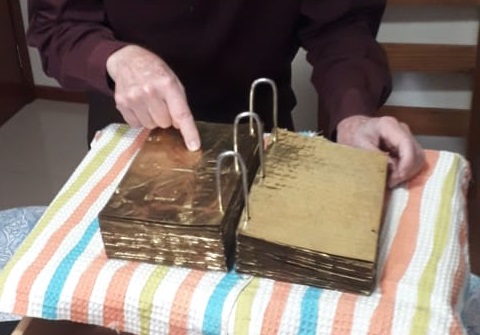
1. There is exquisite poetry inscribed on the Plates of Mormon, but the Nephite language inscribed there became an extinct language that modern scholars would not be capable of deciphering. Only a seer and prophet, “by the gift and power of God”, can take an extinct language and give it new life, in new times; a rebirth, so-to-speak, of the ancient words that have been delivered to the prophet by the angel Moroni, first in the 19th century and later in the 21st century, “…as one crying from the dead, yea, even as one speaking out of the dust” (Moroni 10:27 or Moroni 10:22-23 RLDS).
2. “Syntax” is how words relate to one another, morphing and forming together to reveal the material we call grammar. The syntax of a language contributes to its unique flow. In the 20th century, some dedicated Biblical and Book of Mormon scholars began to discover a Hebrew syntax emerge from the pages of the Book of Mormon, even though in the 19th century Joseph Smith Jr., presumably, did not know that such things as Hebrew parallelisms and chiasmus existed, or that a Hebrew syntax could be woven into messages written in other languages, such as Reformed Egyptian, and English. There was no known terminology for Hebrew poetic structures at that time.
3. In the 21st century, Maurício A. Berger translated a previously sealed portion of the Plates of Mormon by the gift and power of God. However, some of the unsealed part is still sealed to our understanding. Although Modern scholars and researchers are not able to unseal something that is sealed in our minds, they can uncover Hebrew poetry and some other Hebraisms within the lines of The Sealed Book. Some knowledge is necessary, regarding the order and structure of Hebrew poetry—the type of poetry recorded by the prophets of Jehovah in our scriptures—in order to recognize the rhymes that have no phonetic parallels.
4. In 1939, barely over one hundred years since Christ’s church was restored in 1830 by Joseph Smith Jr., several people began to publish their discoveries of Hebrew poetry that was discovered in the Book of Mormon. According to author Wade Brown, it is not possible to list everyone who has discovered a Hebrew linguistic syntax in Mormon’s text. Only a few are mentioned here: E. Cecil McGavin and A. S. Reynolds discovered three Hebrew poetic parallel forms in the Book of Mormon, and identified them as “synonymous parallelism, antithetic parallelism, and antimony”. In 1969, John W. Welch published numerous chiastic parallelisms he found in the Book of Mormon. In 1986, Angela Crowell,1 “published an excellent analysis of the many parallel types which she had discovered in her articles, ‘Hebrew Poetry in the Book of Mormon’… She may have been the first to detail such a variety of forms”. (Wade Brown, THE GOD-INSPIRED LANGUAGE OF THE BOOK OF MORMON, pages 42,45,47,48).
5. The term, “Hebraisms”, is not limited to Hebrew poetry structures. Included in that term is the intricate syntax of Hebrew wordplays and idioms, of Hebrew poetry and grammar, and many more Hebrew linguistic devices which arise in languages other than Hebrew and which can flow almost seamlessly when translated from one language to another, as long as the words and grammar translated by the gift and power of God have not been altered by scribes, editors, or publishers who are not seers. The Merriam Webster Dictionary defines the noun “Hebraism” in a very simple way. Hebraisms are:
- a characteristic feature of Hebrew occurring in another language
- the thought, spirit, or practice characteristic of the Hebrews
- a moral theory of emphasis attributed to the Hebrews
(https://www.merriam-webster.com/dictionary/Hebraism)
6. The flow of the Hebrew syntax can help modern scholars affirm the Jewish or Hebrew origin of an ancient text. Since many Hebraisms are interwoven in the text of the Book of Mormon and The Sealed Book is from the same Plates of Mormon, a scholar of Hebraisms would expect Hebraisms to be interwoven into the text of The Sealed Book when inspecting its pages.
7. Let’s take a small but important step into Hebrew poetry now. The first step is simple: we need to understand how a rhyme in Hebrew poetry is structured. Hebrew rhymes are parallels of thoughts and ideas instead of parallels of sound. For example, each of the following examples are segments of scripture that have rhymes of thought. Pay special attention to the word-pairs in bold where parallelisms are shown as a synonymous word or phrase in each part, or as an antithetical word or phrase. Antithetical parallels are described beautifully in 3 Nephi 26:5 (3 Nephi 11:33 RLDS): “If they be good, to the resurrection of everlasting life; and if they be evil, to the resurrection of damnation; being on a parallel, the one on the one hand and the other on the other hand, according to the mercy, and the justice, and the holiness which is in Christ, who was before the world began.”
8. To bring the poetic structures forward to our attention, as is common when determining Hebrew parallelisms in academic research, each sentence is stacked according to a parallel of thought and labeled. In this article a letter of the alphabet and additional characters are used. The following parallelisms in this paragraph are categorized with [A] and [A’] and the rhymed phrases or word-pairs have bold letters for our convenience:
Example 1:
[A] In the beginning was the Word,
[A] and the Word was with God,
[A] and the Word was God.
(Example 1 is a Synonymous Parallelism in John 1:1).
Example 2:
[A] Ye are swift to do iniquity,
[A’] But slow to remember the Lord your God.
(Example 2 is an Antithetical Parallelism from 1 Nephi 17:45, Book of Mormon—a rhyme of opposing ideas).
Example 3:
[A] On this day alone in Zion there will be protection,
[A’] and in the New Jerusalem a refuge for the fellow citizens of the saints.
(Example 3 is a beautiful example of Synonymous Parallelism, a rhyme of ideas, in The Sealed Book, Words of Moroni, verse 20).
9. From Hebrew Poetry in The Sealed Book Part 1, we have learned about a foundational element of ancient Hebrew poetry, the “parallelism”, which is a key linguistic device used by the ancient prophets of Jehovah. From this basic information, we can identify synonymous and antithetical parallelisms when we search Holy Scriptures from the prophets of the Most High God. As researchers of The Sealed Book of Mormon who are inquisitive about these holy records — we can now take this simple knowledge about parallelisms and apply that knowledge when searching and reading The Sealed Book of Mormon. Doing this will not only enhance one’s feeling of connectedness to God’s word, but will also contribute to the growing knowledge of the collective body of the Second Invitation and can lead to further discoveries of Hebraisms in The Sealed Book of Mormon. Hebrew Poetry in The Sealed Book, Part 2, uses the knowledge of Poetic Hebrew parallelisms to also discover chiasmus in the Sealed Book of Mormon.
Footnotes:
- Angela Crowell, the mother of Tyler Crowell, was a respected scholar of Biblical Interpretation and Hebraisms during her lifetime, as well as a researcher and journalist regarding the Qumran (Dead Sea) scrolls. Angela’s research regarding the Dead Sea scrolls involved an archaeological dig in Qumran and an opportunity to take her family with her to Israel for one month during her studies. She published numerous articles during her lifetime. These wonderful opportunities of traveling to Israel and being exposed to his mother’s research implanted priceless knowledge in Tyler’s mind as he absorbed information, including his mother’s details about Hebraisms. Tyler is one of the original witnesses of the plates of Mormon, and by predetermination by God, Tyler had the unique opportunity to hold the record of truth in his hands and turn the metal pages of the sealed portion of The Book of Mormon in 2018. Also by predetermination by God, Tyler continues his mother’s legacy, utilizing the knowledge from Angela’s research material and from the things she taught in the home when Tyler was young, by discovering Hebraisms in the pages which were translated by the gift and power of God by Maurício A. Berger from the sealed portion of the Plates of Mormon. Tyler’s wife, Renee Crowell, has studied Angela’s material and is assisting Tyler in this legacy.
RESOURCES:
The Bible, The Book of Mormon and The Sealed Book of Mormon
Wade Brown, THE GOD-INSPIRED LANGUAGE OF THE BOOK OF MORMON, pp. 42,45,47,48, 1988.
Merriam-Webster.com Dictionary, s.v. “Hebraism,” accessed May 12, 2025, https://www.merriam-webster.com/dictionary/Hebraism
Ronald J. Williams, Hebrew Syntax, An Outline, second edition, University of Toronto Press, Toronto Buffalo London, 2nd edition, p. 3, 1980.